
最新刊期
-
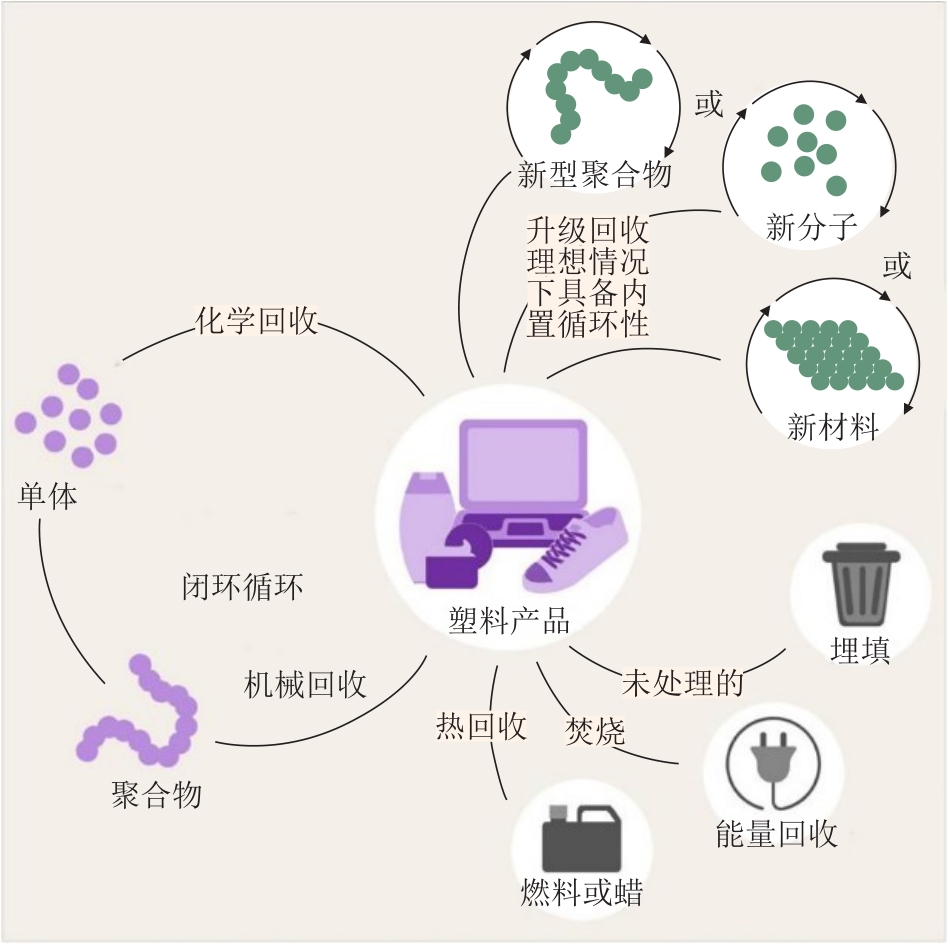 摘要:The treatment of pollution caused by waste plastics and their recycling and resource recovery have become global challenges. Pyrolysis is a key technological approach for achieving the chemical recycling and high-value conversion of waste plastics. From the perspectives of technological development and industrialization, the major advances and challenges of fundamental researches, process developments and application promotions of waste plastic pyrolysis technologies were reviewed. The pyrolysis mechanisms of various types of plastics and different pyrolysis technologies were analyzed, and the effects of key operational parameters on the distribution characteristics of target products were summarized. The achievements of pyrolysis technologies for waste plastics in preparation of liquid fuels, hydrogen-rich gases and light olefins were summarized, and industrial demonstration cases and future developments of pyrolysis technologies were discussed.关键词:waste plastics;pyrolysis technologies;pyrolysis mechanisms;high-value conversion;industrialization3|0|0更新时间:2026-05-07
 -
 摘要:Under the “carbon peaking and carbon neutrality” goals, carbon capture, utilization and storage (CCUS) is a key technology for achieving deep emission reductions in energy industry. Among them, carbon dioxide-enhanced oil recovery (CCUS-EOR) has become a research focus due to its dual benefits of carbon emission reduction and production enhancement. However, for the entire CCUS-EOR process, there is a lack of a unified and operable life-cycle carbon accounting methodology currently, which leads to insufficient scientific rigor in the assessment of carbon emission reduction benefits. Taking Yanchang Petroleum’s 5 × 10⁴ t/a CCUS-EOR demonstration project as the research object, a carbon emission reduction accounting and evaluation method was constructed to cover the whole process of “preparation-construction-operation-closure”. Based on the emission factor method, the approach systematically defines the accounting boundaries and baseline scenarios for capture, transportation, oil displacement and storage, associated gas recovery, and safety monitoring. Using data such as the 2023 carbon dioxide emission factor for electricity in Shaanxi Province (0.6335 kg/(kW·h)), the carbon emissions of the demonstration project at each stage of its life cycle were calculated. The results show that the annual baseline emissions of the demonstration project are 50065.9 t, the average annual life-cycle emissions are 8520.5 t, the annual net emission reductions are 41545.4 t, and the average life-cycle emission reduction efficiency is 83.0%. The method not only verifies the significant carbon emission reduction benefits of the CCUS-EOR project, but also provides a reference for constructing a verifiable and scalable carbon accounting methodology for CCUS projects.关键词:CCUS-EOR;full life cycle evaluation;carbon reduction;emission factor method5|0|0更新时间:2026-04-30
 -
 摘要:In response to issues such as low feedstock utilization and poor gas quality in existing coal pyrolysis processes in China, this study focuses on the core scientific problem of the interaction between active components and blue-coke in the proposed new process for blue-coke preparation. Using low-rank Shenmu coal as the raw material, the interaction laws of single active species (CO2 and H2O) and coal pyrolysis volatile with blue coke at different temperature were systematically investigated using a fixed-bed reactor and a drop-tube coupled fixed-bed reactor, respectively. The effects on product distribution and blue coke properties were analyzed. The results show that 550~750 °C is the optimum temperature range for Shenmu coal pyrolysis to prepare blue coke. As the pyrolysis temperature rises, the blue coke yield decreases, ash and fixed-carbon contents increase, whereas volatiles and specific electrical resistance decrease. Slight gasification reaction occurred between CO2 and H2O and blue coke at 650~750 °C, which had little effect on ash content and fixed carbon, but significantly affected the specific resistance. Furthermore, coal pyrolysis volatiles inhibited further pyrolysis of blue coke, leading to an increase in blue coke yield; however, the increase in yield at 650 °C is smaller than that at 550 °C, and the specific resistance decreases due to reactions between the active components and the blue coke surface. This study elucidates the influence of active components on the properties of blue coke at the medium-low temperature range for coal pyrolysis, which provides theoretical support for the utilization of raw coal, the improvement of coal gas quality and the optimization of coal pyrolysis processes and reactor development.关键词:coal pyrolysis;Blue coke;active component;pyrolysis temperature;interaction5|0|0更新时间:2026-04-27
 -
 摘要:Supported metal catalysts are important branches in the field of heterogeneous catalysis, and the reasonable design and regulation of catalyst structure could enhance effectively the catalytic performance. Unlike with traditional atomic layer deposition (ALD), the area-selective atomic layer deposition (AS-ALD) can utilize the difference in the nucleation of precursors in different area of supports, which enables the precise deposition of precursors at specific sites and provides opportunity for obtaining catalyst with outstanding catalytic performance. The research progress of AS-ALD in structural regulation of supported metal catalysts was reviewed, including constructing catalysts with core-shell or nano-bowl structure, regulating the spatial distribution and modifying the surface structure of metal nanoparticles. The supports, inhibitors and deposition equipments all hinder the development of AS-ALD, and therefore the focus of future work can focus on the development of precursor and inhibitors.关键词:area-selective atomic layer deposition;supported metal catalyst;core-shell structure;nano-bowl structure;spatial distribution;inhibitors11|0|0更新时间:2026-04-27
 -
 摘要:Formic acid serves as a mild hydrogen energy carrier, and its decomposition for hydrogen production offers a viable solution to hydrogen transportation challenges. Noble metal-supported catalysts represent an effective strategy for enhancing the activity and selectivity of hydrogen production by formic acid decomposition. A series of Zn-doped Al2O3 supports with regularly shapes (hexagonal plates (HP), stacked plates (SHP)) were synthesized by hydrothermal method, followed by Pt loading by precipitation-deposition method. Then, Pt/ZnxAl2-xOy catalysts with low Pt loading (w(Pt) = 1.0%) were prepared. The crystalline structures, microstructures, textural properties and other properties of supports and catalysts were comprehensively characterized by methods such as XRD, SEM and N2 physical adsorption/desorption. By dual-regulation strategy of “support morphology and composition”, the catalytic performances of catalysts for hydrogen production by formic acid decomposition were studied. The results show that, under 200 ℃, both types of catalysts with Zn mole fraction (n(Zn)/n(Al + Zn)) of about 3% exhibit optimal performances, with formic acid conversion rate and H2 yield approaching 100%. Appropriate Zn enhances the electronic interaction between Pt and supports and optimizes the electronic state of Pt. However, excessive Zn doping will cover active sites and promote the dehydration of formic acid to CO. Moreover, under the same conditions, the catalyst with HP morphology rich in (110) crystal planes show higher H2 selectivity. This work will provide a new idea for designing low noble-metal-loading and high-selectivity catalysts for hydrogen production by formic acid decomposition.关键词:regular shape;hydrogen energy;formic acid decomposition;metal doping3|0|0更新时间:2026-04-27
 -
 摘要:During the blowdown of supercritical CO2 pipelines, significant temperature drops are likely to occur due to the throttling effect, which may induce safety risks such as material cold brittleness and blockage. Therefore, in engineering practice, it is necessary to improve the blowdown efficiency and controllability under the premise of ensuring pipeline integrity. A supercritical CO2 pipeline model was established based on OLGA, and the effects of vent diameter on temperature and pressure evolution characteristics as well as blowdown time were analyzed under single-end venting and simultaneous dual-end venting conditions. On this basis, an “alternating dual-end venting” strategy integrating staged depressurization and zonal coordination was proposed, and its combined regulation performance in suppressing extreme temperature drops and improving blowdown efficiency was evaluated under different vent diameter combinations. The results show that, under single-end venting and simultaneous dual-end venting conditions, increasing the vent diameter can significantly enhance the blowdown rate, but the minimum temperature decreases markedly, reaching -70 ℃ under some conditions, resulting in a high risk of cold brittle failure. Therefore, it is difficult to balance safety and blowdown efficiency. In contrast, the alternating dual-end venting strategy effectively weakens the throttling intensity of each release and suppresses extreme temperature drops through stepwise pressure release and heat recovery on the non-venting side, maintaining the minimum temperature above -30 ℃ and controlling the total blowdown time within 8.0 h. Among them, the “75 mm + 25 mm” diameter combination shortens the total blowdown time to about 5.0 h under the specified conditions while ensuring structural safety, achieving a better balance between safety and efficiency of the blowdown process. The alternating venting concept proposed in this study can provide a reference for low-temperature risk prevention and venting process optimization in supercritical CO2 pipeline blowdown.关键词:supercritical CO2;blowdown simulation;alternating blowdown;vent diameter;blowdown efficiency7|0|0更新时间:2026-04-27
 -
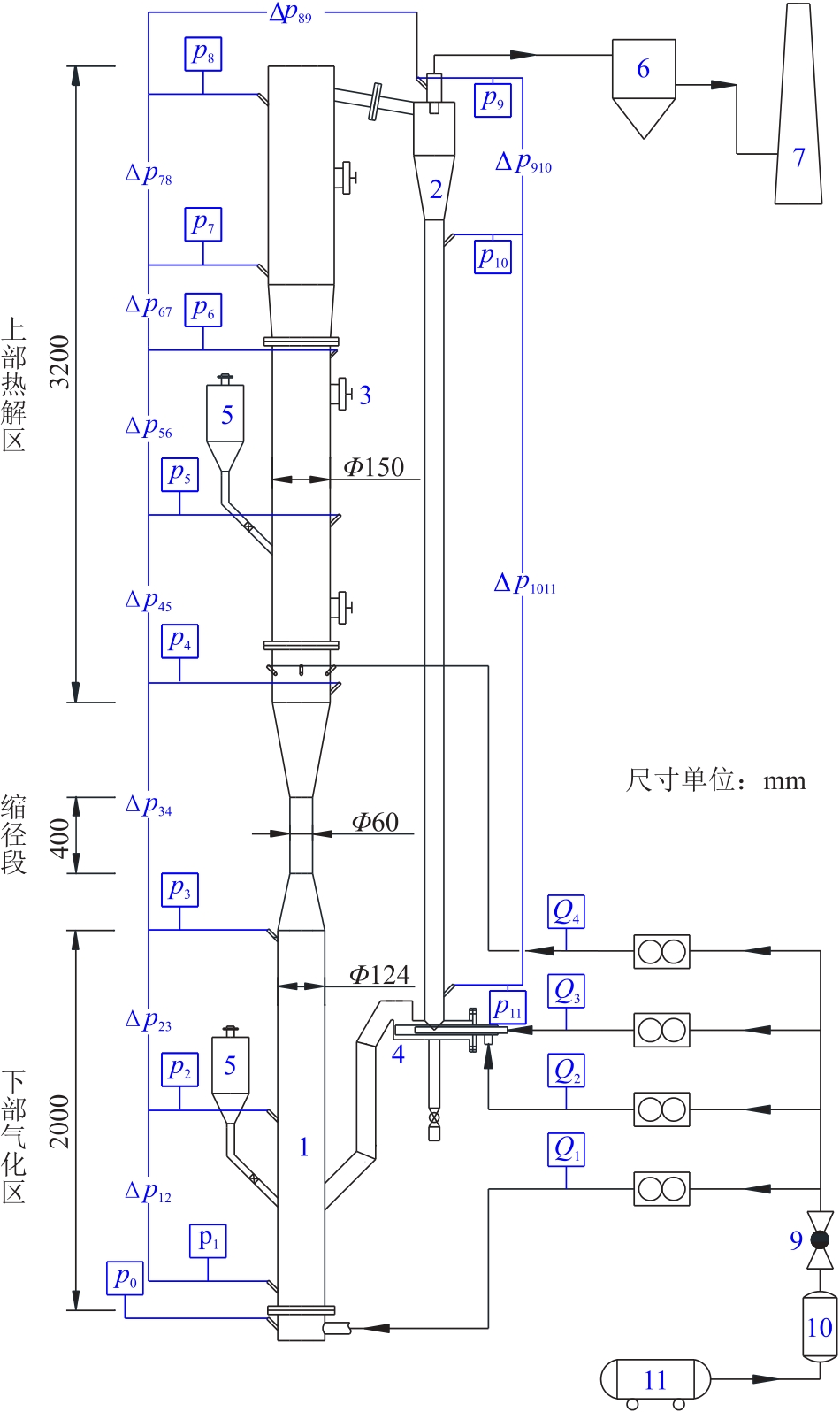 摘要:Pyrolysis is a critical pathway for the high-value utilization of low-rank coal, the core of which lies in the development of high-efficiency pyrolysis reactors. Optimizing the riser structure of the multi-stage variable-diameter circulating fluidized bed reactor can significantly enhance the backmixing and blending performance of particles. Cold-state experiments were conducted to investigate the effects of expanding section structures and coal injection nozzle arrangements (tangential, oblique-tangential and oblique-inserted) on particle flow characteristics via using pulverized coal and semi-coke as the raw materials. The results indicate that the expanding structure can inhibit the axial decay of solids concentration effectively. When expanding diameter ratio is 1.16 and 1.27, the particle volume fraction in the pyrolysis section can be increased by 15% to 40% (compared with the constant-diameter structure), thereby promoting the formation of local dense-phase zones. When the oblique-tangential nozzle arrangement is employed, the optimal blending effect between pulverized coal and semi-coke is achieved, and the mass fraction of pulverized coal in the solid phase can remain stable at approximately 0.20 along the axial direction of riser, with coefficient of variation less than 0.05.关键词:variable-diameter riser;pulverized coal;semi-coke;backmixing;blending;pyrolysis3|0|0更新时间:2026-04-27
 -
DBD-assisted preparation of fly ash-based catalysts for enhancing CO2 desorption from amine solution
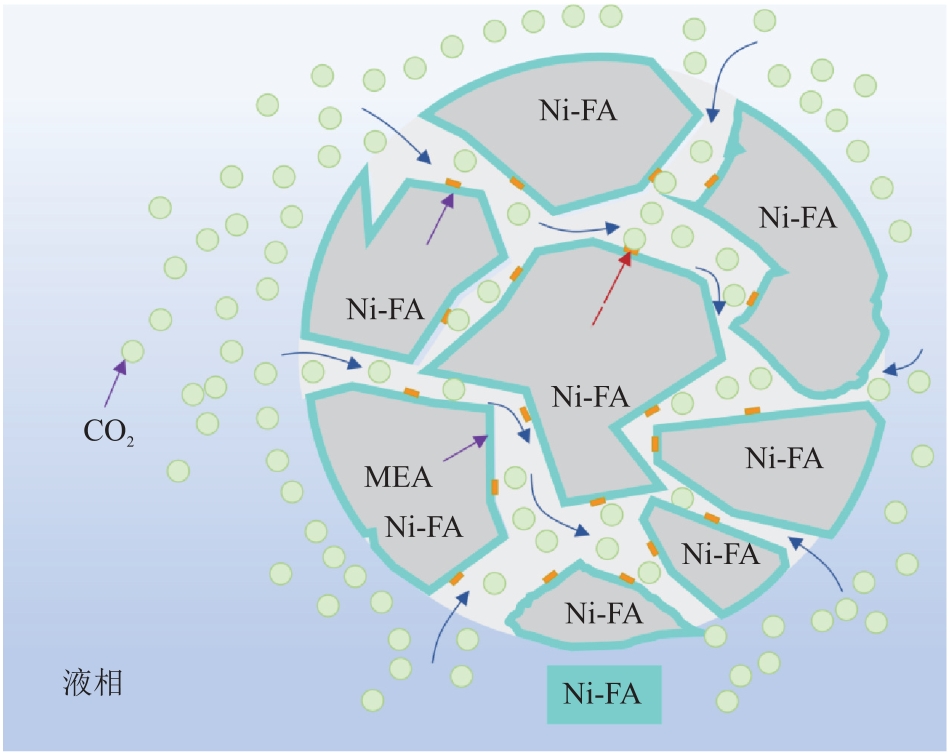 摘要:In the context of global active response to climate change, the development of efficient carbon capture technologies is essential for achieving “carbon neutrality”. To explore the feasibility of optimizing the structures of fly ash‑based catalysts via dielectric barrier discharge (DBD) technology and thereby enhancing their catalytic performances for CO2 desorption from monoethanolamine solutions, response surface methodology was adopted to analyze the effects of voltages, treatment time and N2 flow rates on the catalytic performances of fly ash-based catalysts. The results demonstrate that DBD treatment can significantly refine the textural properties of the catalysts and optimize their active sites. Ni/FA-a-DBD (FA and a represent fly ash and alkali modification, respectively) prepared under the optimal conditions of voltage of 27 kV, treatment time of 646 s and N2 flow rate of 111 mL/min exhibits favorable catalytic performance, with average enhancement rate of 16.53% (compared with Ni/FA-a) for CO2 desorption capacity.关键词:dielectric barrier discharge;fly ash-based catalysts;CO2 desorption;mononethanolamine solution;response surface methodology5|0|0更新时间:2026-04-27
 -
 摘要:With the depletion of fossil fuels and increasing urgency to reduce carbon emissions, the role of sustainable aviation fuel (SAF) in achieving the aviation industry’s 2050 net-zero emissions target has become increasingly prominent. Currently, the SAF preparation technologies are diverse, characterized by a wide range of feedstock sources and complex reaction mechanisms. Various SAF preparation technologies were reviewed, such as lipid hydroprocessing and biomass gasification, and the feedstock sustainability, reaction mechanisms and process flows of different technologies were mainly analysed. The assessment of each technology was conducted from economic feasibility, feedstock types and carbon reduction contributions, aiming to provide insights for the selection of SAF production technologies and strategic industrial planning.关键词:sustainable aviation fuel;carbon emission reduction;biomass;carbon dioxide4|0|0更新时间:2026-04-27
 -
 摘要:Addressing the key scientific issues in the dehydrogenation of 1,4-butanediol (BDO) to γ-butyrolactone (GBL) over copper-based catalysts, including the lack of systematic comparison among catalysts prepared by different methods, unclear structure-activity relationships, and the incomplete reaction network, this study employed a stepwise precipitation method to prepare a series of CuZnAl catalysts (denoted as CZx-ZA). Their performance was compared with a CZA catalyst synthesized by the conventional coprecipitation method. The influence of reaction parameters on catalytic performance for BDO dehydrogenation to GBL was systematically investigated. The optimal CZ1-ZA catalyst exhibited excellent performance under the optimized conditions (220℃, space velocity of 1.0 h-1, gas/alcohol molar ratio of 5.0, N2 atmosphere), achieving a BDO conversion of 99.94% and a GBL yield of 99.00%, along with outstanding stability during a 240 h long-term test. Multiple characterization techniques, including XRD, TEM, N2 physisorption, N2O titration, XPS, H2-TPR, and NH3-TPD, were employed to systematically investigate the structure-activity relationship between the structure of catalysts, textural properties, electronic states, reducibility, surface acidity and its catalytic performance. The experimental results demonstrate that the stepwise precipitation method effectively optimizes the textural properties and electronic structure of the catalyst. The resulting CZ1-ZA catalyst possesses a moderate specific surface area, the smallest average pore diameter, and the highest copper dispersion, which enhances Cu-ZnO interaction and the reducibility of copper species. Furthermore, stepwise precipitation enables precise regulation of the acid strength distribution, concentrating acid sites in the weak and medium-strong acid regions, thereby effectively avoiding dehydration side reactions caused by excessive strong acid sites. A comprehensive reaction network for BDO dehydrogenation was constructed, elucidating the competitive pathways between the main reaction and side reactions. This study provides a theoretical basis for the rational design and development of high-performance catalysts for the dehydrogenation of BDO to GBL.关键词:1,4-Butanediol;γ-butyrolactone;Stepwise precipitation;CuZnAl catalyst;Reaction network2|0|0更新时间:2026-04-27
 -
 摘要:To address the pollution crisis caused by acidic exhaust gases emitted from industrial processes, a novel deep eutectic solvent (DES) was prepared using propylene glycol (PG) as the hydrogen bond donor and hexylethylenediamine (Hexen) as the hydrogen bond acceptor at a molar ratio of 1:1. The successful synthesis of the PG-Hexen was confirmed by its melting point, and its viscosity at room temperature was only 27.85 mPa·s, indicating good fluidity and absorption potential. The hydrogen bonding interactions, thermodynamic behavior and the absorption capacity and microscopic mechanism of three acidic gases (CO2, SO2, H2S) by PG-Hexen were analyzed at the molecular level through density functional theory (DFT) and molecular dynamics (MD) simulations. The results indicated that the main hydrogen bond formed between PG and Hexen was of the O—H···N type (EHB = 30 kJ·mol-1), and the formation process was thermodynamically spontaneous (ΔG = -26.71 kJ·mol-1). The absorption capacity (mol/mol) of PG-Hexen for acidic gases was in the order of SO2 (0.49) > CO2 (0.37) > H2S (0.33). Energy analysis showed that the interaction strength between PG-Hexen and SO2 (-3471 kJ·mol-1) was much higher than that with CO2 (-1187 kJ·mol-1) and H2S (-777 kJ·mol-1), and the van der Waals interaction was dominant. The spatial distribution indicated that SO2 was uniformly distributed within the PG-Hexen liquid phase, while CO2 and H2S were mainly enriched at the gas-liquid interface. This study explored the structural characteristics and gas absorption capacity of PG-Hexen at the microscopic level, providing a theoretical basis for the design of multi-component waste gas co-treatment systems and the application of green solvents.关键词:deep eutectic solvent;density functional theory;molecular dynamics;simulation;gas absorption3|0|0更新时间:2026-04-27
 -
 摘要:In polymer-grade ethylene production, the deep removal of trace acetylene is an essential step in ensuring downstream process safety and catalyst stability. Compared to traditional technologies with high energy consumption and limited removal performance, adsorption separation method has attracted much attention due to its green and energy-saving potential. Its core lies in the development of high-performance adsorbents that can accurately identify acetylene. Due to the close physical properties such as molecular sizes between acetylene and ethylene, developing adsorbents that accurately identify acetylene molecules is extremely challenging. Metal-organic frameworks (MOFs) materials have shown great application potential in this field due to their controllable pore structures and surface chemical properties. Research progress on MOFs materials for adsorption separation of acetylene/ethylene was systematically reviewed. The core design ideas of hydrogen bond recognition and flexible response, as well as the construction strategies of ligand functionalization, pore size/shape control and pore space segmentation, were summarized to enhance separation performance. The key technological progress on green amplification synthesis and particle shaping was also summarized. Looking forward, the research needs to move from “intrinsic selectivity” to “engineering applicability”, focusing on the stability of complex working conditions, mass transfer kinetics, forming enhancement, process integration and economic evaluation, accelerating the industrial application process of high-performance MOFs materials.关键词:acetylene;ethylene;adsorption separation;metal-organic frameworks5|0|0更新时间:2026-04-22
 -
 摘要:With the rapid development of green energy systems, subsea pipelines are facing increasingly complex operating conditions such as the sequential transportation of immiscible systems, and the inter-batch mixing risk is significantly increased. To clarify the interface evolution and mixing characteristics of such systems during transportation, a fully visualized wheel loop and a 565 m long-distance scaled multiphase flow loop were innovatively employed. A white oil-water immiscible system was selected to carry out experiments. The mixed-oil behavior during sequential transportation of immiscible systems was systematically investigated, and the mixing mechanism and dominant controlling factors were revealed, and feasible optimization transportation strategies were proposed. The results show that the mixing behavior of immiscible systems is jointly controlled by fluid shear, turbulence and gravitational instability. At low flow rates, the flow pattern is dominated by stable stratified flow, with a long mixing section but low oil content. At high flow rates, the stratified flow transitions to dispersed flow, where turbulence accelerates droplet breakup and wall-film detachment, and the mixing is concentrated at the two ends of the water slug. Under the experimental conditions, the minimum length of the oil-containing section in dispersed flow can be reduced to 28.56% of that in stratified flow, while the average oil content at the outlet is 2.68 times that of stratified flow. Based on the above results, it is recommended, under the premise of controllable energy consumption, to adopt shorter initial oil slugs, maintain dispersed flow transportation at relatively high flow rates, and apply a transportation strategy in which the low-viscosity phase precedes and the high-viscosity oil phase follows, so as to shorten the mixing section and suppress wall-film trailing, thereby improving transportation stability. This results can provide a reference for mixing risk control and operation parameter optimization in the sequential transportation of immiscible systems, and support the safe and efficient transportation of multi-energy systems.关键词:subsea pipeline;immiscible system;sequential transportation;interfacial evolution;mixing mechanism6|0|0更新时间:2026-04-22
 -
 摘要:The catalytic hydrogenation of carbon dioxide (CO2) to methanol enables the resource utilization of CO2 and has the potential to fundamentally eliminate its adverse impacts on the climate. When integrated with CO2 capture technologies and wind- and solar-powered hydrogen production, this technology can effectively promote the transformation of the energy structure toward low-carbon and clean energy. Given the chemically stable nature of CO2, the development of efficient and stable catalysts is crucial for achieving industrial breakthroughs in CO2 hydrogenation to methanol. First, by comparing the characteristics of different catalysts used in CO2 hydrogenation to methanol, the favorable prospects of copper-based catalysts for industrial application were clarified. Then, focusing on reaction mechanisms, active sites, supports and promoters, the research progress of copper-based catalysts reported both domestically and internationally was systematically reviewed, and on this basis, the directions for catalytic performance optimization of copper-based catalysts were summarized. Finally, based on the pilot-scale and industrialization progress of the related technologies, the technical bottlenecks encountered in the industrialization of copper-based catalysts and the corresponding countermeasures were identified from the perspectives of process design and techno-economic analysis. Research on copper-based catalysts has entered a stage of mechanism-guided catalyst design. Although most studies are still at the laboratory scale, with the further advancement of theoretical research, the development of catalyst preparation technologies, and the upgrading of industrialization approaches, copper-based catalysts are still expected to serve as the primary catalysts for the large-scale industrialization of CO2 hydrogenation to methanol before the emergence of new catalytic systems.关键词:CO2 hydrogenation;methanol;heterogeneous catalysis;copper-based catalysts;industrialization5|0|0更新时间:2026-04-17
 -
 摘要:Propylene (C3H6) is an important olefin feedstock in the petrochemical industry. During its production process, impurities such as propane (C3H8) are generated, which reduce the product purity. Therefore, it is necessary to carry out precise separation of C3H8/C3H6. Zeolitic imidazolate framework materials (ZIFs), as a branch of metal-organic frameworks (MOFs), have become one of the candidate materials in the field of gas separation due to their tunable pore structures and excellent stability. The diverse topological structures of ZIFs have a significant influence on gas adsorption and separation. Different ZIFs with various topological structures (ZIF-2, ZIF-3, ZIF-6, ZIF-8 and ZIF-10) were selected, and the effect of topology on the adsorption and separation performance of C3H8/C3H6 (50/50, volume ratio) was analyzed based on the Grand Canonical Monte Carlo (GCMC) simulation method. The results show that the topological structure affects the pore structure of ZIFs, which in turn influences the pore environment, affinity and fluid-solid interactions, resulting in changes in adsorption capacity, adsorption heat, threshold pressure and C3H8/C3H6 separation selectivity. The ultra-micropores of ZIF-2 with BCT topology lead to strong interactions between gas molecules and pore walls, resulting in the highest C3H8/C3H6 separation selectivity (1.40 at 50 kPa) under low pressure (≤ 50 kPa), making it suitable for small-scale separation under low pressure. ZIF-10 with MER topology, due to its large pore size and three-dimensional channels, forms multilayer adsorption under high pressure (≥ 100 kPa). The interactions between gas molecules and between gas molecules and pore walls exhibit a synergistic effect, resulting in the highest C3H8 adsorption capacity and C3H8/C3H6 separation selectivity (8.33 mmol/g and 1.34 at 100 kPa), making it suitable for large-scale separation under high pressure. ZIF-8 with SOD topology has the lowest C3H8/C3H6 separation selectivity due to the dual limitations of pore structure and adsorption affinity. This study can provide a reference for the directional design of ZIFs and the optimization of C3H8/C3H6 separation.关键词:ZIFs;topology;C3H8/C3H6;pore structure;molecular simulation3|0|0更新时间:2026-04-17
 -
 摘要:CO2 capture from coal-fired flue gas is a critical step in achieving carbon emissions reduction, and highly efficient and stable solid CO2 adsorbents are central to this process. However, impurity gases (such as H2O, O2 and SO2) in actual flue gas can degrade the adsorbent structure and reduce its CO2 adsorption performance, which adversely affects the application of CO2 capture technologies. Effects of SO2, H2O and O2 on adsorption performance of typical solid CO2 adsorbents (such as CaO-based, MgO-based and solid amine adsorbents) were described and targeted modification strategies were summarized. Current research often focuses on the effect of a single impurity, while existing modification methods suffer from issues such as high costs and complex processes. Future research can consider the effects of multiple coexisting impurities and optimize adsorbent modification strategies to develop CO2 adsorbents that combine high adsorption performances and stabilities while being capable of operating under complex conditions.关键词:CO2 capture;coal-fired flue gas;impurity gases;CO2 adsorbents;modification strategies6|0|0更新时间:2026-04-17
 -
 摘要:CO2 geological storage, as an important component of the carbon capture, utilization and sequestration (CCUS) technology, is one of the key approaches to achieving the goal of carbon neutrality. The long-term secure storage of CO2 is ensured through the combined action of multiple mechanisms. Deep saline aquifers, depleted oil and gas reservoirs, deep unmineable coal seams, and basalt formations are the main geological storage sites for CO2. Due to the relatively low viscosity of CO2 and its strong mobility in formations, the sweep efficiency during injection is limited, which results in low storage efficiency and insufficient utilization of reservoir space. Strategies such as CO2 water-alternating-gas injection (CO2-WAG), CO2 foam injection and carbonated water injection (CWI) can effectively improve the efficiency of CO2 geological storage, while also enhancing the safety and long-term stability of the storage process. First the mechanisms of CO2 geological storage were introduced, and then the research progress and key issues of three injection strategies (CO2-WAG, CO2 foam injection and CWI) in improving storage efficiency and stability were reviewed. Combined with typical engineering practices, the shortcomings of existing technologies were revealed and optimization directions were proposed. Finally, the technical characteristics and process conditions of the relevant technologies were comparatively summarized. This study aims to provide references for the optimization design and engineering application of CO2 geological storage technologies.关键词:CO2 geological storage;storage efficiency;water-alternating-gas injection;foam injection;carbonated water injection36|0|0更新时间:2026-04-10
 -
 摘要:Liquid organic hydrogen carriers (LOHC) represent a promising hydrogen storage strategy owing to tis high safety and mild reaction conditions. However, the dehydrogenation reaction of LOHC imposes stringent requirements on the catalysts, thus the development of highly efficient catalysts capable of achieving dehydrogenation under low-temperature conditions is essential. A series of titanium nanotube (TNT) supports were synthesized via high-temperature hydrothermal method, and various supported Pd-based catalysts were prepared by loading Pd onto the supports through the impregnation method and the dehydrogenation performance toward 8H-N-methylindole (8H-NMID) was evaluated. The physicochemical properties of catalysts were characterized by XRD, SEM, TEM, XPS, etc., and the structure-activity relationships of catalysts were explored. The results show that hydrothermal treatment increases the catalyst’s specific surface area and oxygen vacancy density, among which the Pd/TNT-150-24 catalyst exhibites the maximum specific surface area and oxygen vacancy density. Pd/TNT-150-24 displayes excellent catalytic performance. After reacting at 180 ℃ for 6 h, it can achieve complete dehydrogenation of 8H-NMID. The conversion rate of 8H-NMID and the selectivity to N-methylindole (NMID) of this catalyst can both reach 100%. The dehydrogenation reaction rate of 8H-NMID is positively correlated with reaction temperature, with an apparent activation energy of 134.48 kJ/mol. Additionally, Pd/TNT-150-24 demonstrates good stability, retaining a dehydrogenation efficiency of 84.8% after five consecutive reaction cycles.关键词:titanium nanotubes;N-methylindole;dehydrogenation catalyst43|0|0更新时间:2026-04-10
 -
 摘要:With the rapid advancement of industrialization, CO2 emissions continue to rise. Among various CO2 mitigation technologies, the electrocatalytic CO2 reduction to methanol presents broad application prospects. Complex multi-electron/proton transfer mechanisms involved in the electrocatalytic CO2 reduction to methanol were introduced, and the decisive role of the formation and transformation pathways of key intermediates in determining methanol selectivity was pointed out. The research progress on copper-based catalysts (such as mono-copper and copper-based alloys) for electrocatalytic CO2 reduction to methanol was summarized, and the design strategies, catalytic performances and structure-activity relationships of different types of copper-based catalysts were anayzed. Furthermore, future development directions of copper-based catalysts for electrocatalytic CO2 reduction to methanol were discussed.关键词:electrocatalytic CO2 reduction;methanol;copper-based catalysts46|0|0更新时间:2026-04-08
 -
 摘要:As a biofuel and chemical intermediate with broad application prospects, 2-methylfuran has attracted significant attention for its efficient synthesis. Currently, the production of 2-methylfuran relies primarily on furfural as the feedstock. However, the process is often plagued by low selectivity toward 2-methylfuran and poor reaction stability. In contrast, the hydrogenation pathway using furfuryl alcohol as feedstock offers distinct advantages. Cu/MgO, Cu/CeO2, Cu/SiO2 and Cu/Al2O3 were prepared via the precipitation method and their structures were characterized by N2 adsorption/desorption, XRD, H2-TPR, and so on. The effects of acidities of the supports on gas-phase hydrogenation of furfuryl alcohol to 2-methylfuran were investigated. The results indicate that, compared to MgO, CeO₂ and SiO2, Al2O3 exhibits strong interaction with Cu, which enhances the dispersion of Cu species and facilitates the formation more Cu0 and Cu+ active species during reduction. The synergy between active sites and the acid sites on Al2O3 confers the Cu/Al2O3 with superior catalytic performance and excellent stability. Under the reaction conditions of 210 °C, atmospheric pressure, weight hourly space velocity of 4.74 h-1 and n(H2):n(furfuryl alcohol) of 4:1, the initial conversion rate of furfuryl alcohol approaches 100%, and 2-methylfuran selectivity approaches 92.6%. After 10 h of reaction, the conversion rate of furfuryl alcohol of Cu/Al2O3 approaches 89.1%, and the 2-methylfuran selectivity maintains above 87%.关键词:furfuryl alcohol;2-methylfuran;gas-phase hydrogenation;acidities17|0|0更新时间:2026-04-08

- Postal code:610225
- Tel:028-85964717 Email:236764603@qq.com
- Technical support is provided by Beijing Founder electronics co., LTD 蜀ICP备12008600号-10
 蜀公网安备51012202001533
 - It is recommended to read the content of this site in Chrome&IE9+. Please switch to extreme mode in browser 360.
- Cookies We use cookies to help provide and enhance our service and tailor content. By continuing, you agree to the use of cookies.
- Total Visits:424846 Visits Today:262

0